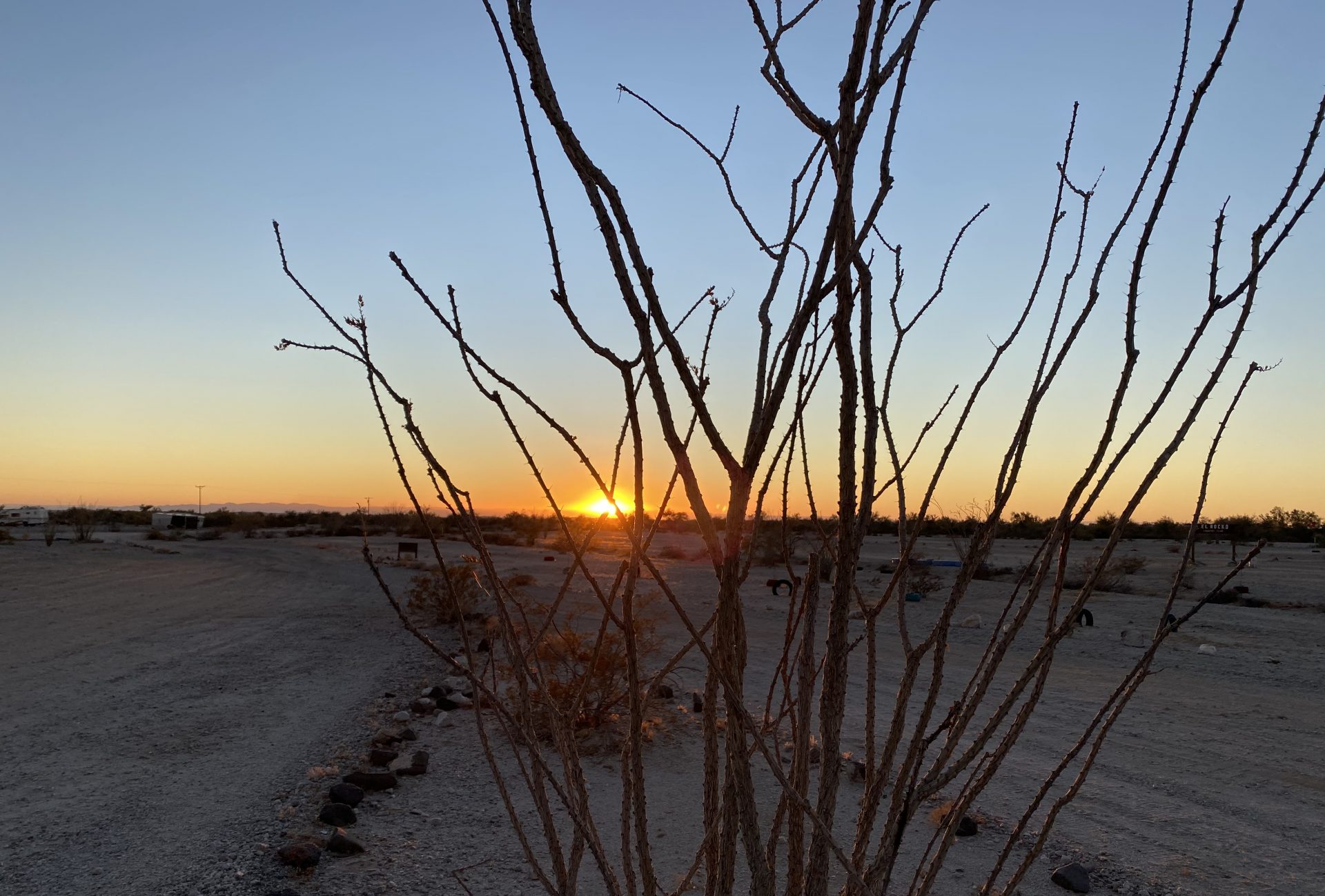
Our RV helped us drive on historic 40E, parallel to Rt. 66, and often took side trips, driving on 66 and recording the landmarks. One such trip was into Mojave National Preserve and went left on a dirt road, which led back to a path and a hike to the dunes.
Route 66, sometimes referred to as “The Mother Road,” holds a legendary place in American history and culture. Established on November 11, 1926, it became one of the original highways in the U.S. Highway System, stretching approximately 2,448 miles from Chicago, Illinois, to Santa Monica, California. Route 66 served as a lifeline across the country, offering travelers, dreamers, and migrants a pathway to opportunity, freedom, and the wide-open promise of the American West.
One of the most remarkable aspects of Route 66 was its role during the Great Depression. When drought and poverty devastated the Dust Bowl states, thousands of families packed up their lives and traveled west along Route 66, seeking work and a fresh start in California. The highway earned the nickname the “Road to Opportunity,” immortalized in John Steinbeck’s novel The Grapes of Wrath, where he described it as “the Mother Road, the road of flight.” For many, it represented not just a route on the map but a road to survival and hope.
As America’s automobile culture blossomed in the mid-20th century, Route 66 became the ultimate symbol of freedom and adventure. Families embarked on cross-country vacations, stopping at quirky roadside attractions, neon-lit motels, diners serving hamburgers and milkshakes, and gas stations that dotted the road. The highway connected small towns with big cities, fueling local economies and giving rise to a unique roadside culture that became part of the American identity.
Culturally, Route 66 has been celebrated in music, film, and art. The famous song “(Get Your Kicks on) Route 66” captured the thrill of traveling the open road. The route appeared in movies, TV shows, and even inspired the beloved animated film Cars. These cultural portrayals ensured that even after its decline, Route 66 remained a symbol of wanderlust, independence, and the spirit of discovery.
The role of Route 66 declined in the 1950s with the development of the Interstate Highway System. Faster, more direct highways bypassed small towns and roadside businesses, leading to economic decline in many communities along the route. In 1985, Route 66 was officially decommissioned as a U.S. Highway. Yet, nostalgia and appreciation for its historic significance sparked preservation movements. Today, travelers can still drive portions of the original road, visit restored landmarks, and experience the charm of vintage Americana.In essence, Route 66 is more than a highway—it is a piece of living history that reflects the evolution of the United States in the 20th century. It represents hardship and perseverance, the joy of travel, and the enduring human desire for exploration and opportunity. Although no longer an official highway, Route 66 remains a cultural icon, a road that continues to inspire wanderers and remind Americans of a time when the open road embodied limitless possibility.
 Traveling the World